Transparent billing expectations
People regularly worry about surprise costs. We clarify direct billing/receipts upfront so you can focus on recovery.

If a sports injury is stopping you from training, competing, or simply moving normally, recovery needs more than short-term pain relief. Our sports-focused rehab starts with a clear assessment, function-based milestones, and a practical return-to-sport plan—so you rebuild capacity, confidence, and performance without guessing.
Sports-focused assessment • Evidence-informed rehab • Progress tracking • Return-to-sport planning
This page is focused on sports and activity-related injuries (acute injuries and overuse problems).
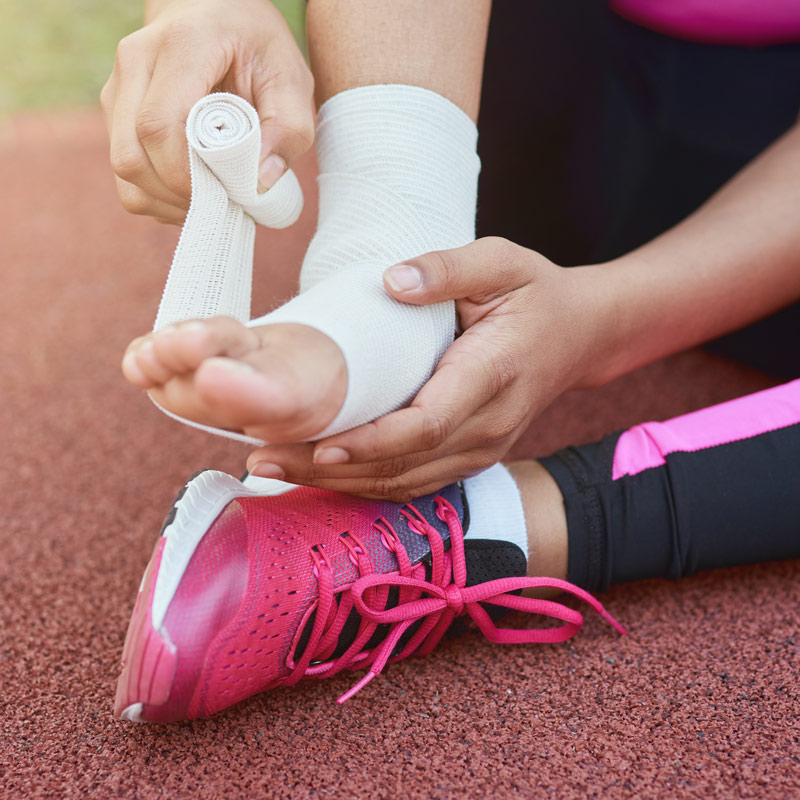
Sports injuries are rarely just “a painful spot.” Most are a combination of tissue irritation, movement compensation, and training-load mismatch. Rehab works best when it follows a clear structure:
Our goal is to return you to sport stronger and more resilient, not just “back quickly.”
Your first visit is designed to give you clarity and a practical plan. Expect:
We’ll discuss how the injury started (sudden vs gradual), what aggravates or eases symptoms, your sport and training schedule, and what movements trigger pain (sprinting, cutting, stairs, overhead work, etc.). If you have imaging or medical notes, bring them.
We assess movement quality, strength, range of motion, balance/control, and sport-specific tolerance (running, landing, change of direction, overhead patterns—based on your sport).
You’ll leave knowing:
what is most likely driving the problem (in plain language)
what we’ll do in-clinic and what you’ll do at home
how we’ll measure progress and adjust the plan
how rehab ties to a return-to-sport pathway
When appropriate, the first visit includes hands-on care and a starter home program. We prioritize steps that reduce irritability and help you move safely right away.
Safety note: If you suspect fracture/dislocation, have severe instability, rapidly worsening numbness/weakness, or serious head-injury symptoms, seek urgent medical assessment.
Meet our team here: Our Team.
Sports injuries tend to fall into common patterns. We frequently help with:
Knee pain/injuries (jumping/landing pain, patellar pain patterns, twisting irritation)
Ankle sprains & foot pain (repeat sprains, “giving way,” impact pain, running overload)
Hip & groin pain (adductor overload, hip flexor irritation, mobility restrictions)
Calf/Achilles issues (strain, tendon irritation, return-to-running pain)
Shoulder pain (overhead sports, rotator cuff irritation, instability patterns)
Elbow/wrist pain (gripping overload, tennis/golf elbow patterns, falls onto the hand)
Back pain (lifting, rotation, training-load spikes)
Neck/upper back strain (contact sports, training overload)
Sports injury rehab responds best to a balanced plan: targeted symptom control + progressive capacity building.
load management (what to pause, what to modify, what to keep)
manual therapy for stiffness/sensitivity when appropriate
mobility work and graded exposure to tolerated movement
early strengthening to restore control without flare-ups
progressive strengthening aligned with your sport demands
stability/control training (landing mechanics, hip/knee control, shoulder stability)
conditioning so you tolerate training volume again
technique cues when relevant (running, jumping, cutting, overhead patterns)
sport-specific drills (acceleration/deceleration, agility, jumping/landing, change of direction)
return-to-sport milestones (capacity, confidence, and next-day response)
graduated plan: practice → partial training → full training → competition
prevention plan (warm-up strategy, training-week structure, recovery guidance)
Depending on your needs, care may include:
On-site parking is available. If you’d like the easiest entrance/parking route, call us and we’ll guide you.
Direct billing may be available for many extended health plans. Coverage varies by insurer and plan—if direct billing isn’t available, we provide receipts for reimbursement.
On-site parking is available. If you’d like the easiest entrance/parking route, call us and we’ll guide you.
Direct billing may be available for many extended health plans. Coverage varies by insurer and plan—if direct billing isn’t available, we provide receipts for reimbursement.
Return-to-sport planning (not just pain relief)
A common frustration athletes mention online is getting temporary relief without a real plan back to training. We build a structured return-to-sport progression with milestones—so you’re not guessing when to increase intensity.
Criteria-based progression (confidence + control)
People often worry about returning too early and getting reinjured. When appropriate, we use functional benchmarks (strength, control, sport drills, and next-day response) to guide progression.
Load management that fits real training
Overuse injuries often happen when training load increases faster than tissue tolerance. We show you what to modify (and what you can still do) so you keep moving while rebuilding capacity.
Rehab-first approach (hands-on + active plan)
Hands-on care can help early, but lasting change comes from progressive rehab. You’ll get a realistic home program that fits your schedule and equipment access—so results don’t depend on constant in-clinic visits.
Clear expectations on session frequency and progress
A common online question is “how many sessions will I need?” We don’t guess a fixed number. We set milestones, reassess, and adjust early if progress stalls—so your plan stays efficient.
Transparent billing expectations
People regularly worry about surprise costs. We clarify direct billing/receipts upfront so you can focus on recovery.
No—physiotherapy is direct access in Ontario. Some insurance plans may still require a referral for reimbursement. If you’re unsure, bring your insurance details and we’ll guide you on what to check.
In many cases, modified training is better than total rest. We reduce or change the movements that flare symptoms while keeping safe activity that supports recovery—then build back capacity step-by-step.
It depends on the tissue involved, severity, and how reactive symptoms are. Instead of relying only on a timeline, we use milestones: reduce irritability → rebuild strength/tolerance → sport-specific capacity → return-to-sport progression.
Return-to-sport should be criteria-based. We progress you through milestones (pain/swelling control, mobility, strength, control, sport drills, next-day response) rather than relying on a single “time frame.”
It depends on your injury and goals. Many athletes start more frequently early (to calm irritability and learn the plan), then transition to spaced visits as home training becomes the driver of progress. We reassess and adjust early if progress stalls.
Mild soreness for 24–48 hours can happen as you reintroduce load and movement. It shouldn’t feel like a major setback. If pain spikes or lingers, we adjust intensity, volume, or exercise selection.
That usually means training load is exceeding current tissue tolerance—or a key capacity (strength, control, endurance, mechanics) hasn’t caught up. We rebuild tolerance progressively and add a prevention plan (warm-up, week structure, recovery) to reduce recurrence.
Not always. Imaging depends on red flags and medical decision-making. We can screen your presentation and recommend medical referral when appropriate.
Use the link below to book your appointment. We’ll assess your injury, explain your likely recovery pattern in plain language, and outline a practical plan aligned with your training goals and return-to-sport milestones.
BOOK ONLINE